
In-Home Dementia Care Consistency Tips
Table of Contents
- Why Consistency Matters in Dementia Care
- Building a Daily Routine for Dementia Patients
- Creating a Written Dementia Care Plan
- Using a Dementia Caregiver Communication Log
- Implementing a Caregiver Handoff Checklist for Dementia
- Managing Transitions and Resistance to Routine Changes
- Ensuring Consistency Across Multiple Caregivers
- Frequently Asked Questions
Last Updated: October 5, 2026
Why Consistency Matters in Dementia Care
Dementia changes how the brain processes information and manages daily tasks. When routines shift, patients become confused and anxious. Consistency in dementia care reduces that confusion and creates a sense of safety.
Structured routines can calm patients and reduce behavioral challenges. A person with dementia may not remember what happened yesterday, but their body remembers patterns. When the same caregiver arrives at the same time, in the same way, patients feel secure.
Consistency also helps caregivers. When everyone follows the same approach, there’s less guesswork. Tasks get done the same way each time. Communication improves. Families worry less.
The key to successful in-home dementia care consistency is building routines that work for your loved one’s current abilities, then protecting those routines from unnecessary changes.
Building a Daily Routine for Dementia Patients
A good daily routine starts with the person’s natural rhythms. Some people wake early. Others move slowly in the morning. A routine that fights these patterns will fail.
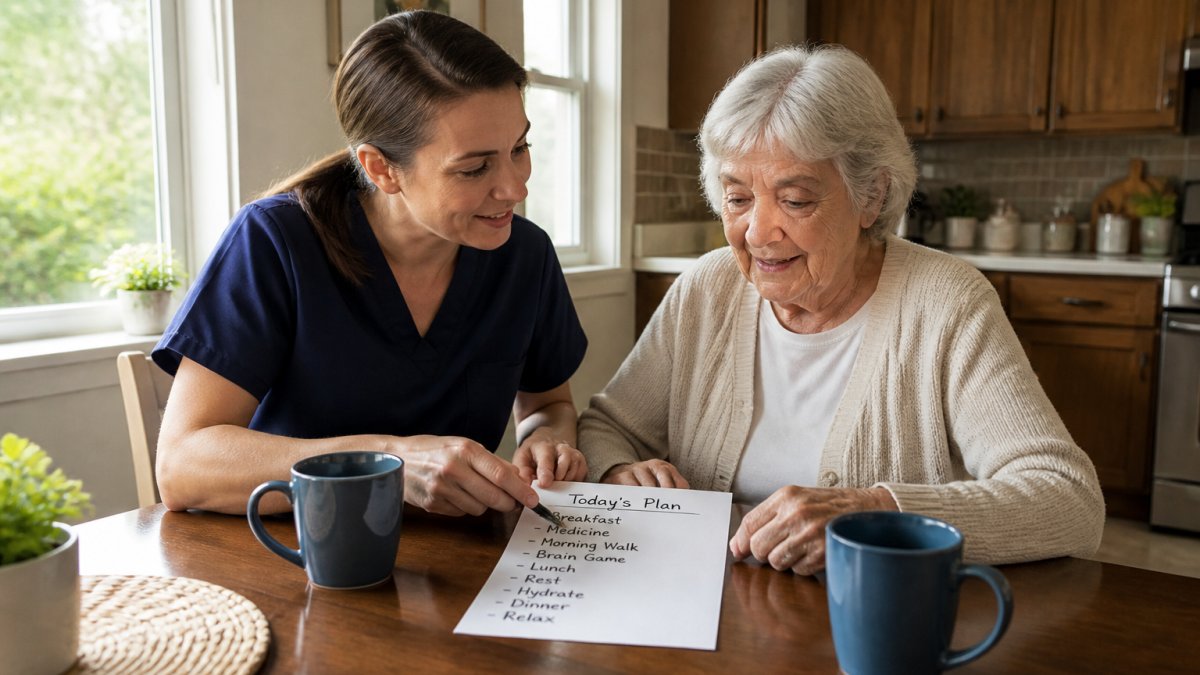
Establishing these predictable patterns creates a secure environment that makes it significantly easier to engage dementia patients in meaningful activities throughout the day.
Timing and Structure
The best routines anchor around three or four key times each day: wake-up, meals, afternoon activity, and bedtime. These anchors give structure without being rigid.
Wake time should stay the same every day. If your loved one wakes at 7 a.m. one day and 9 a.m. the next, their whole day shifts. Stick to one wake time, even on weekends.
Meals work best at the same hours. Breakfast at 8 a.m., lunch at noon, dinner at 6 p.m. The body’s hunger signals align with these times. Eating at consistent times also helps with medication timing.
Afternoon activities prevent sundowning, the confusion and agitation many dementia patients experience as evening approaches. A walk, simple craft, or music session at 3 p.m. every day gives the day structure and purpose.
Bedtime routines matter most. Bath, pajamas, quiet time, bed, same order, same time each night. This signals the body it’s time to sleep.
Adapting Routines as Needs Change
Dementia progresses. The routine that works today may not work in three months. Watch for signs that change is needed.
If your loved one becomes resistant to a particular activity, don’t force it. Adapt. If they loved morning walks but now refuse to leave the house, shift to walking around the living room or sitting on the porch.
Changes should be gradual. Introduce one small change at a time. Give it two weeks before adding another. Too many changes at once overwhelm people with dementia.
When you do change something, tell the caregiver team immediately. Write it down. Update your care plan. One person changing the routine without telling others creates confusion.
Creating a Written Dementia Care Plan
A written plan is your foundation. It documents what works and what doesn’t. It keeps everyone aligned.
Your dementia care plan should include:
- Wake and sleep times
- Meal times and food preferences
- Medications and timing
- Activities your loved one enjoys
- Topics that upset them
- How to redirect if they become agitated
- Bathroom routine and any assistance needed
- Preferred caregiver approach (gentle, direct, quiet, etc.)
Write this in plain language. Don’t use medical jargon. A caregiver reading it should understand exactly what to do.
Keep the plan visible. Post it in the kitchen or bathroom where caregivers see it daily. Update it when something changes. Outdated plans create confusion.
Using a Dementia Caregiver Communication Log
A communication log is where caregivers record what happened during their shift. It’s not a medical chart. It’s a simple record: what your loved one ate, how they slept, any concerns, any good moments.
A typical entry might read: “Mom had breakfast at 8 a.m. (oatmeal, toast, coffee). Morning walk at 10 a.m., she was happy and pointed out the neighbors’ garden. Lunch at noon. Nap from 1-3 p.m. Seemed restless around 4 p.m., so we did a puzzle together. Dinner at 6 p.m. Bedtime routine at 8 p.m., went to bed without resistance.”
This log serves three purposes. First, it shows the next caregiver what happened, so they can pick up smoothly. Second, it helps you spot patterns. If your loved one is always restless at 4 p.m., you can plan an activity then. Third, it creates a record for medical visits. Doctors need to know how your loved one functions at home.
Keep logs simple. A notebook or shared online document works. Caregivers should spend 5 minutes writing, not 30.
Implementing a Caregiver Handoff Checklist for Dementia
When one caregiver leaves and another arrives, a handoff checklist prevents missed information. It takes 10 minutes and prevents hours of problems.
A basic handoff checklist includes:
- Any changes to the routine today
- Medications given and times
- How the patient ate and drank
- Bathroom needs and any issues
- Mood and behavior notes
- Any appointments or visitors coming
- What activity is planned next
- Any concerns to watch for
The departing caregiver reviews this checklist with the arriving caregiver. Not via text or email, in person, face to face. This ensures nothing gets missed.
If your loved one had a difficult moment, describe it. “Mom was upset after lunch” is vague. “Mom became upset when we mentioned her sister, so I redirected her to the photo album” is useful. The next caregiver knows what to avoid.
Managing Transitions and Resistance to Routine Changes
People with dementia often resist changes, even small ones. This isn’t stubbornness. Their brain is struggling to process something new.
When you need to change a routine, introduce it slowly. If you’re switching from morning showers to evening showers, don’t do it tomorrow. Start talking about it. “Next week we’re going to try showers at night instead.” Repeat this several times.
On the first day of the change, expect resistance. Don’t argue. Stay calm. Offer choices: “Would you like a warm or cool shower?” Choices give back some control.
If resistance is severe, pause. Try again in a week. Sometimes the timing matters. If your loved one is tired or hungry, they’ll resist anything.
Document what works. If your loved one accepts changes better in the afternoon, make afternoon the time for new routines. If they respond well to a particular caregiver explaining the change, have that person lead it.
Ensuring Consistency Across Multiple Caregivers
Multiple caregivers are common in home care. Each brings their own style. Without structure, patients see chaos.
The solution is a detailed care plan and regular communication. Every caregiver should read the plan before their first shift. Every caregiver should participate in handoffs. Every caregiver should update the communication log.
Roseville families working with ACASA Home Care Roseville benefit from our RN-led approach. Our nurses ensure all caregivers follow the same dementia care consistency standards.
When your loved one has the same primary caregiver most of the time, with backups who know the routine, consistency happens naturally. If you’re rotating five different caregivers each week, consistency breaks down. Try to limit primary caregivers to two or three.
Pay attention to which caregiver your loved one responds to best. That person should be your primary. Backups should be people your loved one already knows and trusts.
Consistency in dementia care isn’t complicated, but it does require commitment. A written plan, clear communication between caregivers, and stable routines create an environment where your loved one feels safe and calm. ACASA Home Care Roseville specializes in dementia care consistency with RN-led oversight and communication systems that keep everyone aligned. Call 916-794-2288 to discuss how we can bring structure and stability to your loved one’s daily care.
Frequently Asked Questions
Why is consistency so important for someone with dementia?
Consistency reduces anxiety and confusion for people with dementia. Familiar routines, the same caregiver, and predictable environments help them feel safer and more in control. When routines change frequently or multiple unfamiliar caregivers rotate through, dementia patients often experience increased agitation, behavioral changes, and difficulty remembering daily tasks. A stable, consistent approach supports both emotional well-being and functional independence.
What should I include in a dementia care plan?
A dementia care plan should document daily routines (wake time, meals, medications, activities), preferred communication methods, known triggers for confusion or distress, mobility and safety needs, medical information, and emergency contacts. Include the person’s preferences, habits, and what calms them. Share this plan with all caregivers and update it regularly as needs change. Having everything written down ensures consistency even when different caregivers are present.
How can I keep dementia care consistent when using multiple caregivers?
Use a dementia caregiver communication log to document daily observations, mood, eating, medication administration, and any changes in behavior or health. Implement a caregiver handoff checklist so each shift confirms what was completed and what needs attention. Schedule regular caregiver meetings or briefings to align on approach. Assign the same primary caregiver when possible and limit the number of substitutes. Professional in-home care services, like those offered by RN-led agencies, help maintain consistency through trained staff and structured handoff protocols.
What should I do if my loved one resists their daily routine?
Resistance often signals confusion, discomfort, or loss of autonomy. Approach gently and offer choices when possible (‘Would you like breakfast now or in 15 minutes?’). Use simple, calm language and avoid arguing about the routine itself. If resistance is sudden, check for physical discomfort, medication side effects, or environmental changes. Document what triggered the resistance in a communication log so caregivers can adjust their approach. Flexibility within the overall structure, not abandoning routine entirely, usually works best.

Table of Contents
Why Managing Medication Schedules for Aging Parents MattersStep 1: Gather Complete Medication InformationHow to Organize Medical…

Table of Contents
Why Choosing the Right Home Care Provider MattersKey Questions to Ask a Home Care AgencyStaffing and QualificationsExperience with…