
Preventing Falls for Seniors at Home: A 2026 Guide
Table of Contents
- Start With a Professional Home Safety Assessment for Seniors
- Clear Trip Hazards and Improve Lighting Levels
- Bathroom Safety Modifications for Elderly Adults
- Balance Exercises for Elderly Adults to Build Gait Stability
- Review Medications and Manage Chronic Conditions
- Use Smart Home Technology and Emergency Response Systems
- Address the Psychological Impact of Fall Fear
- A Caregiver Checklist for Preventing Falls for Seniors at Home
- Frequently Asked Questions
Last Updated: September 23, 2026
Start With a Professional Home Safety Assessment for Seniors
Preventing falls for seniors at home starts with one honest walk-through. A professional home safety assessment for seniors is a room-by-room review that flags hazards, checks lighting and mobility needs, and sets a priority list. At ACASA Home Care Roseville, our RN-led team treats that assessment as the foundation for every care plan.
What a Room-by-Room Assessment Covers
A good assessment looks at how your parent actually moves through the home, not how it looks on a tour. Key checks include:
- Entryways: thresholds, steps, and door clearance
- Kitchen: reachable storage, floor condition, seating
- Bedroom: bed height, path to the bathroom, night lighting
- Bathroom: grab bars, non-slip surfaces, toilet height
- Stairs: handrails on both sides, tread condition, lighting
Walk the route your parent takes at 2 a.m. to the bathroom. That trip, in low light and half-asleep, causes more falls than any daytime activity.
Clear Trip Hazards and Improve Lighting Levels
Trip hazards are the fastest thing to fix and the easiest to overlook. Loose rugs, cords, pet bowls, and low furniture cause a large share of in-home falls, and most can be cleared in an afternoon. Improving lighting levels matters just as much, because aging eyes need more light to judge depth and edges.
Start with these changes:
- Remove or tape down every loose rug
- Route cords along walls, never across walking paths
- Keep a clear path at least 36 inches wide in main walkways
- Add motion-sensor night lights in hallways and bathrooms
- Swap dim bulbs for brighter, warm-white LEDs
- Put a lamp within reach of the bed and favorite chair
Bathroom Safety Modifications for Elderly Adults
Bathroom safety modifications for elderly adults prevent the most dangerous falls in the home. Water, hard surfaces, and standing balance are a bad mix for anyone with gait instability. Grab bars, non-slip mats, and a shower seat cover most of the risk.
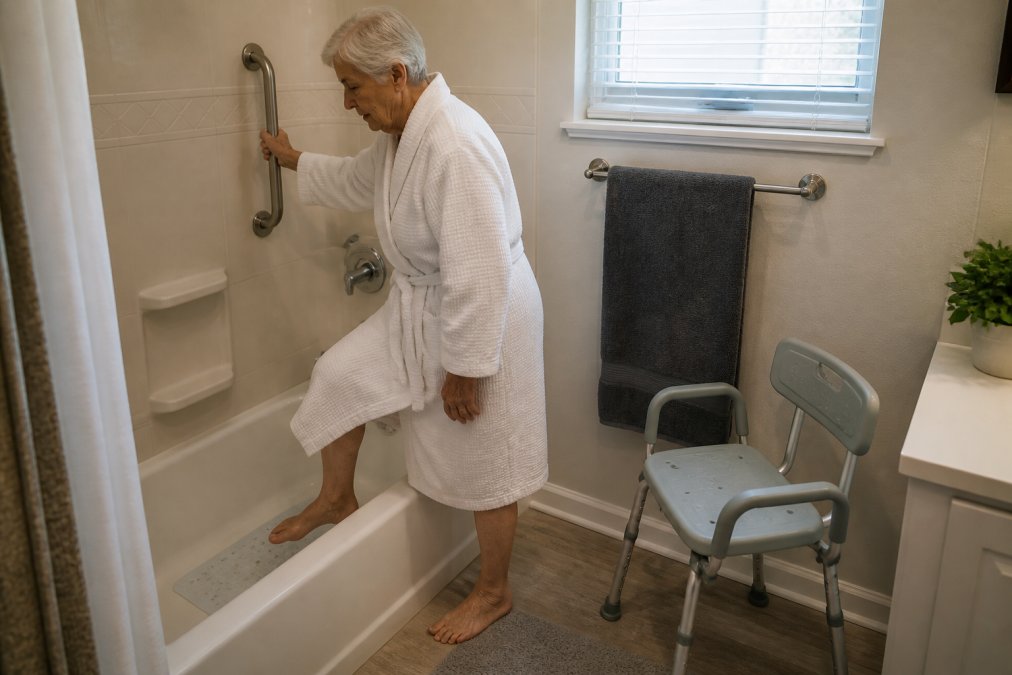
Grab Bars, Non-Slip Mats, and Shower Seats
Install grab bars in three places: beside the toilet, inside the shower, and at the tub entry. Anchor them into studs, not drywall. A towel bar is not a grab bar and will pull out under body weight.
Suction-cup grab bars fail without warning. They are fine for balance cues, but they cannot hold body weight during a slip.
Balance Exercises for Elderly Adults to Build Gait Stability
Balance exercises for elderly adults build the strength, reaction time, and body awareness that keep walking steady. Balance depends on leg and hip strength, ankle flexibility, vision, inner-ear function, and proprioception. Training all of those together reduces fall risk, and works best in short sessions most days with a chair or counter within reach.
A Progressive Balance and Strength Routine
Start at Level 1 and move up only when the current level feels steady for a full week. Stop any exercise that causes pain, dizziness, or near-loss of balance.
Level 1, Supported (weeks 1-2)
- Sit-to-stand from a firm chair, 10 reps. This trains the hip and thigh muscles used in every step.
- Heel-to-toe walking along a counter, 10 steps, one hand on the counter.
- Single-leg stands holding a chair, 10 seconds each side.
- Side leg raises holding a chair, 10 reps per side.
- Slow marching in place, 30 seconds, one hand on a counter.
Level 2, Lightly Supported (weeks 3-4)
- Sit-to-stand without using hands, 10 reps.
- Heel-to-toe walking with fingertips only on the counter, 15 steps.
- Single-leg stands with fingertips on a chair, 15 seconds each side.
- Side and back leg raises, 12 reps per side.
- Marching in place with alternating arm raises, 45 seconds.
Level 3, Unsupported (week 5 and beyond)
- Sit-to-stand with a slow three-second descent, 10 reps.
- Heel-to-toe walking without support, 20 steps, in a hallway with a wall nearby.
- Single-leg stands without support, 20 seconds each side.
- Standing heel raises, 12 reps.
- Weight shifts side to side, 30 seconds.
Do not hold onto furniture that can tip, like a rolling chair or a lightweight side table. A sturdy counter, a wall, or a fixed chair is the right support. If balance feels worse rather than better after two weeks, see a physical therapist before pushing further.
Why Strength Training Matters as Much as Balance Drills
Weak thighs and hips make every step less stable and cause many balance exercises to fail, the person cannot hold the position long enough to train the balance system. Add these two or three times a week:
- Chair squats, 10 reps
- Standing hip abduction (side leg raises), 12 reps per side
- Heel raises, 12 reps
- Step-ups onto a low, stable step, 8 reps per side
Pairing Exercise With the Rest of the Plan
Balance training works best alongside other changes. Supportive footwear with a firm heel and thin, non-slip sole gives the foot better feedback than thick, soft soles. Good lighting lets the eyes do their part. And a home safety assessment removes the hazards that turn a small wobble into a fall. Together, exercise and a safer home address both sides of the problem: the person’s stability and the environment around them.
Review Medications and Manage Chronic Conditions
Medication side effects are one of the most underrated causes of falls, and one of the few you can change quickly. Dizziness, drowsiness, blurred vision, and blood pressure drops can turn a steady walker into an unsteady one after a single dose change. A doctor or pharmacist should review the complete list, prescriptions, over-the-counter drugs, and supplements, at least yearly, and again within weeks of any new medication or dose change.
Drug Classes That Raise Fall Risk
Certain categories show up again and again in fall-risk reviews. Ask specifically about each one:
- Blood pressure medications, diuretics, ACE inhibitors, beta blockers, and alpha blockers can cause orthostatic hypotension, the sudden pressure drop when standing that makes the room tilt.
- Sedatives and sleep aids, benzodiazepines and “Z-drugs” slow reaction time and impair balance through the night and into the next morning.
- Antidepressants, some, especially older tricyclics and certain SSRIs, cause drowsiness and dizziness.
- Anticholinergics, used for allergies, bladder control, and nausea, these can cause confusion and blurred vision, particularly when stacked.
- Opioid pain relievers, slow reflexes and cause drowsiness, and the effect compounds with alcohol or other sedatives.
- Diabetes medications, insulin and sulfonylureas can drop blood sugar too low, causing weakness, shakiness, and fainting.
Ask the pharmacist to check for orthostatic hypotension directly: take blood pressure lying down, then again after standing for one and three minutes. A drop of 20 mmHg systolic or 10 mmHg diastolic is a red flag worth acting on (Orthostatic Hypotension).
Managing Chronic Conditions That Change Gait
Chronic conditions change how someone walks, and that changes fall risk:
- Arthritis, knee and hip pain alters stride, and people often compensate by shifting weight in ways that reduce stability.
- Parkinson’s disease, causes shuffling steps, reduced arm swing, and freezing episodes, all of which raise fall risk.
- Neuropathy, numbness in the feet reduces proprioception, the body’s sense of where it is in space, so uneven floors and stairs become dangerous.
- Stroke, weakness on one side changes balance and gait symmetry.
- Vision and hearing loss, covered elsewhere in this guide, but worth flagging here because untreated changes compound every other condition.
- Cognitive decline, dementia and mild cognitive impairment reduce hazard recognition and the ability to react mid-stumble.
A Simple Medication Review Routine
- Write down every medication, dose, and time it is taken.
- Note any new symptoms, dizziness, drowsiness, unsteadiness, and when they started.
- Bring the list and the bottles to the next appointment.
- Ask whether any drug can be reduced, stopped, or swapped for a lower-risk option.
- Recheck after any change, since side effects often show up within days.
This routine takes an afternoon and can remove one of the most modifiable fall risks in the home.
Use Smart Home Technology and Emergency Response Systems
Assistive technology has caught up with aging in place. Smart speakers, motion sensors, and wearable buttons give families real-time awareness without a camera in every room. Emergency response systems let a senior call for help after a fall, even when they cannot reach a phone.
Options worth considering:
- Wearable alert buttons with fall detection
- Voice assistants for lights and calls
- Smart plugs that turn on lamps on a schedule
- Bed and chair sensors that log nighttime activity
- Video doorbells so families can check in
The best technology is the one your parent will actually wear and use. Test it together before you rely on it.
Address the Psychological Impact of Fall Fear
Fear of falling is a real risk factor, not just a feeling. Seniors who fear falling often move less, which weakens muscles and worsens gait stability. That cycle raises the odds of the very fall they are trying to avoid. The National Institute on Aging guidance on falls and fractures notes that fear of falling can limit activity and independence.
A Caregiver Checklist for Preventing Falls for Seniors at Home
A caregiver checklist turns good intentions into a repeatable routine. Use this list monthly, and again after any hospital stay or health change.
- Clear all walkways of clutter and cords
- Check that rugs are taped or removed
- Test handrails and grab bars for solidity
- Replace burned-out bulbs and add night lights
- Review the full medication list with a doctor
- Confirm footwear has non-slip soles and a secure fit
- Check that the emergency alert device is charged and worn
- Schedule a vision and hearing screening
- Book a physical therapy session if balance has changed
| Risk Area | Common Problem | Fix | How Often |
|---|---|---|---|
| Walkways | Clutter and cords | Clear paths, secure cords | Weekly |
| Bathroom | No grab bars | Install anchored bars | Once, then check monthly |
| Lighting | Dim hallways | Add night lights and LEDs | Monthly |
| Medications | Side effects | Doctor review | Yearly and after changes |
| Balance | Weak legs | Daily exercises | Most days |
| Vision and hearing | Untreated changes | Screening and correction | Yearly |
Frequently Asked Questions
What happens if an elderly person keeps falling at home?
Repeated falls often signal underlying issues like muscle weakness, balance problems, medication side effects, or vision changes. Each fall increases the risk of serious injury and can lead to a fear of falling that reduces activity, which further weakens muscles and worsens gait stability. A doctor should evaluate the cause, and a home safety assessment can identify environmental hazards. In some cases, physical therapy or a mobility aid helps restore confidence and prevent future falls.
What are the most common causes of falls in older adults?
Common causes include trip hazards like loose rugs and clutter, poor lighting, medication side effects such as dizziness or orthostatic hypotension, chronic conditions that affect balance, and muscle atrophy from inactivity. Vision and hearing problems also contribute. A home safety assessment for seniors can pinpoint specific risks in the home, while a medical review addresses health-related factors. Addressing both areas together is the most effective approach.
How can I modify my home to prevent falls for a senior?
Start with a home safety assessment to identify hazards. Remove trip hazards like cords and clutter, add grab bars in the bathroom, install handrails on stairways, improve lighting levels, and use non-slip mats. Consider a shower chair and a raised toilet seat. For smart home technology, motion-sensor lights and emergency response systems add convenience and safety. Balance exercises for elderly adults also help maintain strength and stability, complementing home modifications.
What exercises are recommended to improve balance and prevent falls?
Balance exercises for elderly adults include standing on one foot, heel-to-toe walking, and tai chi. Strength exercises like sit-to-stand and leg lifts build the muscles needed for gait stability. Always check with a doctor or physical therapist before starting a new routine, especially if you have chronic conditions or a history of falls. A physical therapist can design a safe program tailored to individual needs.
Table of Contents
What Urgent Same-Day Home Care Actually MeansHow to Request Immediate Care ServicesPost-Hospital Discharge Planning and Same-Day…

Table of ContentsWhy Post Surgery Home Care Support Matters for RecoveryYour Post-Operative Care Checklist: What to Arrange Before DischargeMedical…